
Control policies, communications, and documents across teams and units
Official versions visible, audience segmentation, and reading tracked when needed.
Vindula helps corporate teams publish to the right audience, keep the official version visible, and track reading when needed across headquarters, branches, and offices.
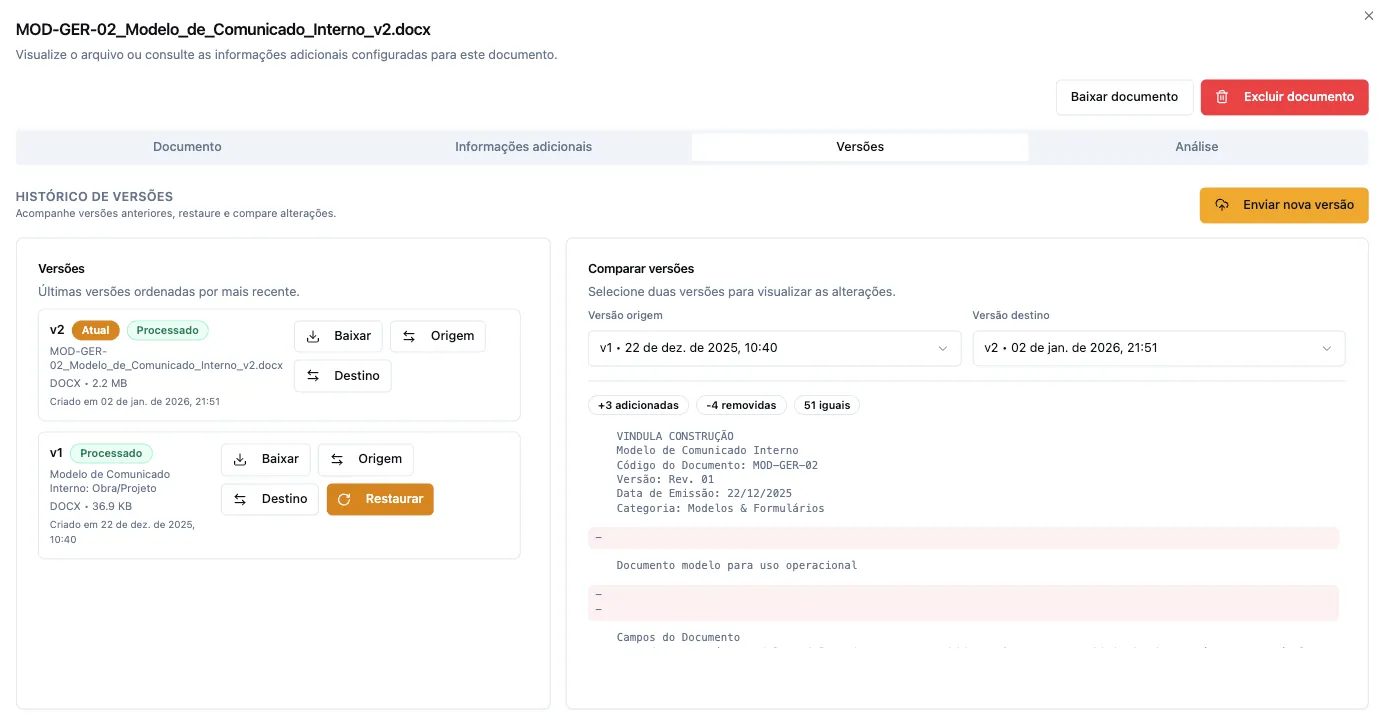
Example of a flow where policies and official documents keep a clearer current version, history, and context for corporate teams.
Operational pain
What usually fails in multi-area corporate environments
Without an official channel, policies, communications, internal knowledge, and training spread across different teams and the company loses clarity about what is actually in force.
Official content dispersed
Each area ends up creating its own repository and the company loses visibility into what is the official reference.
Policies without clear history
Conflicting versions and parallel approvals create legal and operational noise.
Communication too broad
Branches, areas, and different profiles receive the same communication even when the context is different.
How Vindula enters
An official channel by area, profile, or unit
The rollout usually starts with a critical corporate flow: internal policy, official communication, onboarding, or documents with a current version.
Segment by area and unit
Who publishes and who receives varies according to structure, profile, and access needs.
Version policies and documents
Official content stops circulating as loose attachments and starts following validity and history rules.
Track reading when needed
Institutional communication or critical policy can require confirmation in the same flow.
What leadership controls
What becomes clearer for HR, communications, and corporate areas
The gain appears when the company reduces parallel channels, avoids the wrong version, and gains visibility into who published, who received it, and what is current.
Policies with ownership and validity
Each official document gets clearer ownership, versioning, and history.
Segmented communication
Different areas stop competing for the same space without context.
Corporate onboarding and learning paths
New people receive the correct content without depending on manual handoffs.
Scenarios
What usually makes the most sense in multi-unit corporate operations
In multi-unit corporate environments, adoption usually starts when internal policy, official communication, and onboarding need to move out of improvisation and into a clear flow.
Internal policy with history
Official document, current version, and evidence when required.
Institutional communication
Publication segmented by area, unit, or leadership.
Corporate onboarding
Learning paths, official content, and follow-up without improvisation.
Frequently Asked Questions
How does segmentation by area and unit work?
Each area or unit receives specific publications. The system respects the organizational structure to prevent generic content from becoming operational noise.
How to ensure the current policy is being followed?
Vindula versions documents and policies with validity indicators, ownership, and history. The company always consults the most current official version.
Is it possible to track who read important communications?
Yes. When a publication requires read confirmation, the system records who received it, who read it, and when. The history is available for leadership to follow.
Does mandatory training stay integrated with corporate routines?
Yes. Learning paths and mandatory content are part of the same environment as communication and documents. The employee sees the training in the routine flow.
Can we start with a specific corporate problem?
Yes. The project can start with internal policy, institutional communication, onboarding, or documents with current version. Initial gain varies according to priority operational pain.
Want to see how this applies to your corporate context?
The guided demo can start from internal policy, institutional communication, onboarding, or a corporate knowledge base.